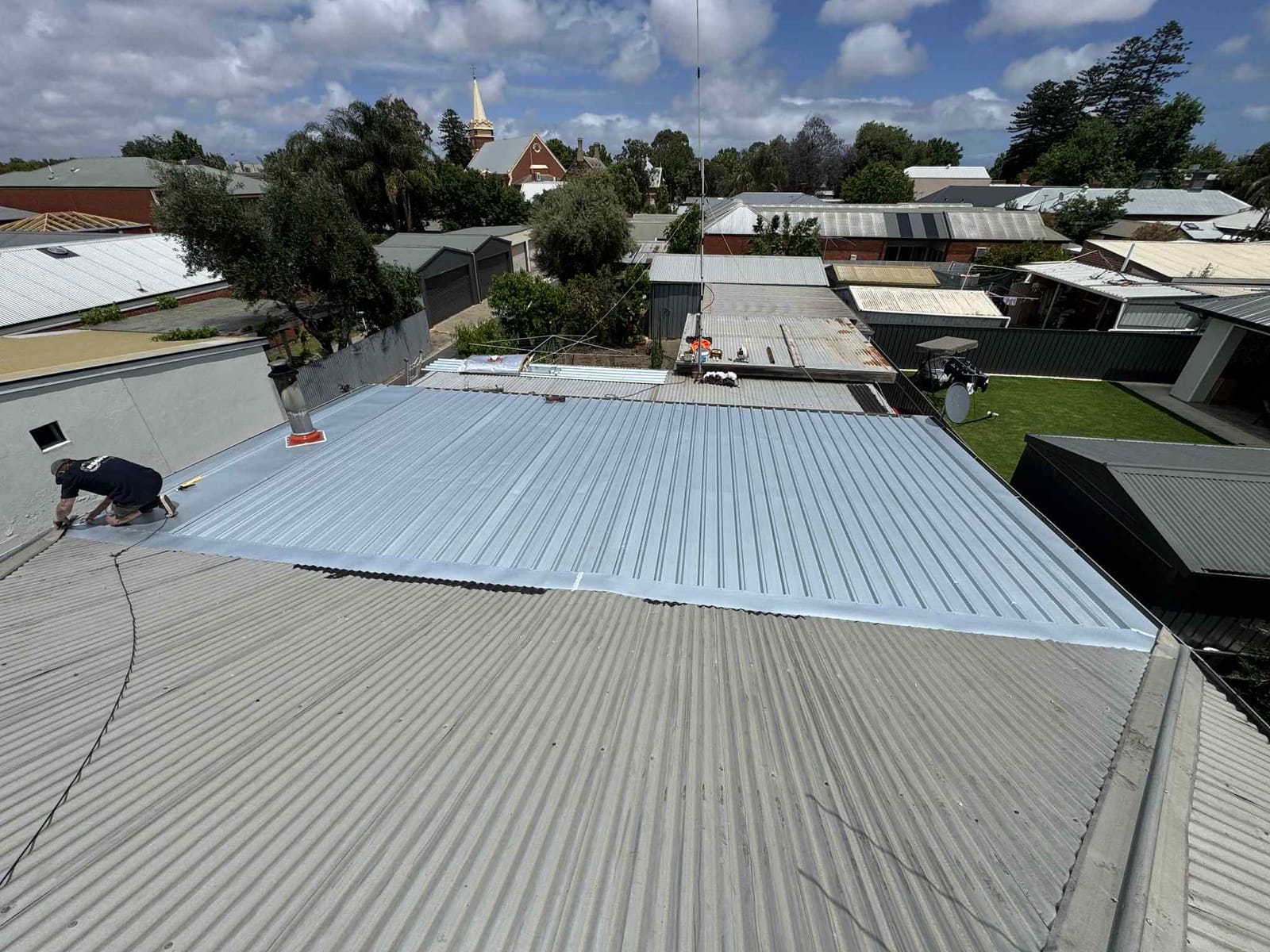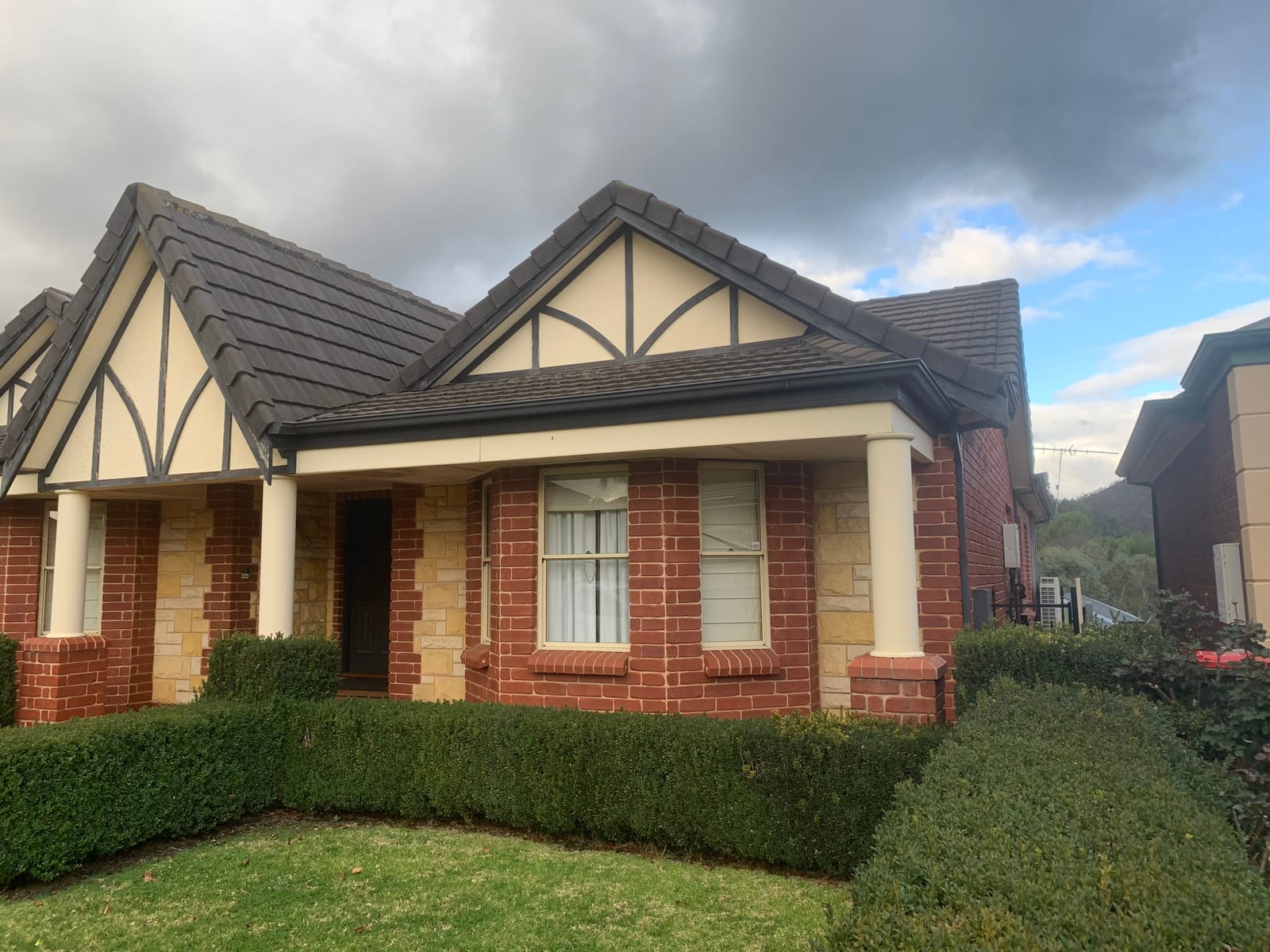
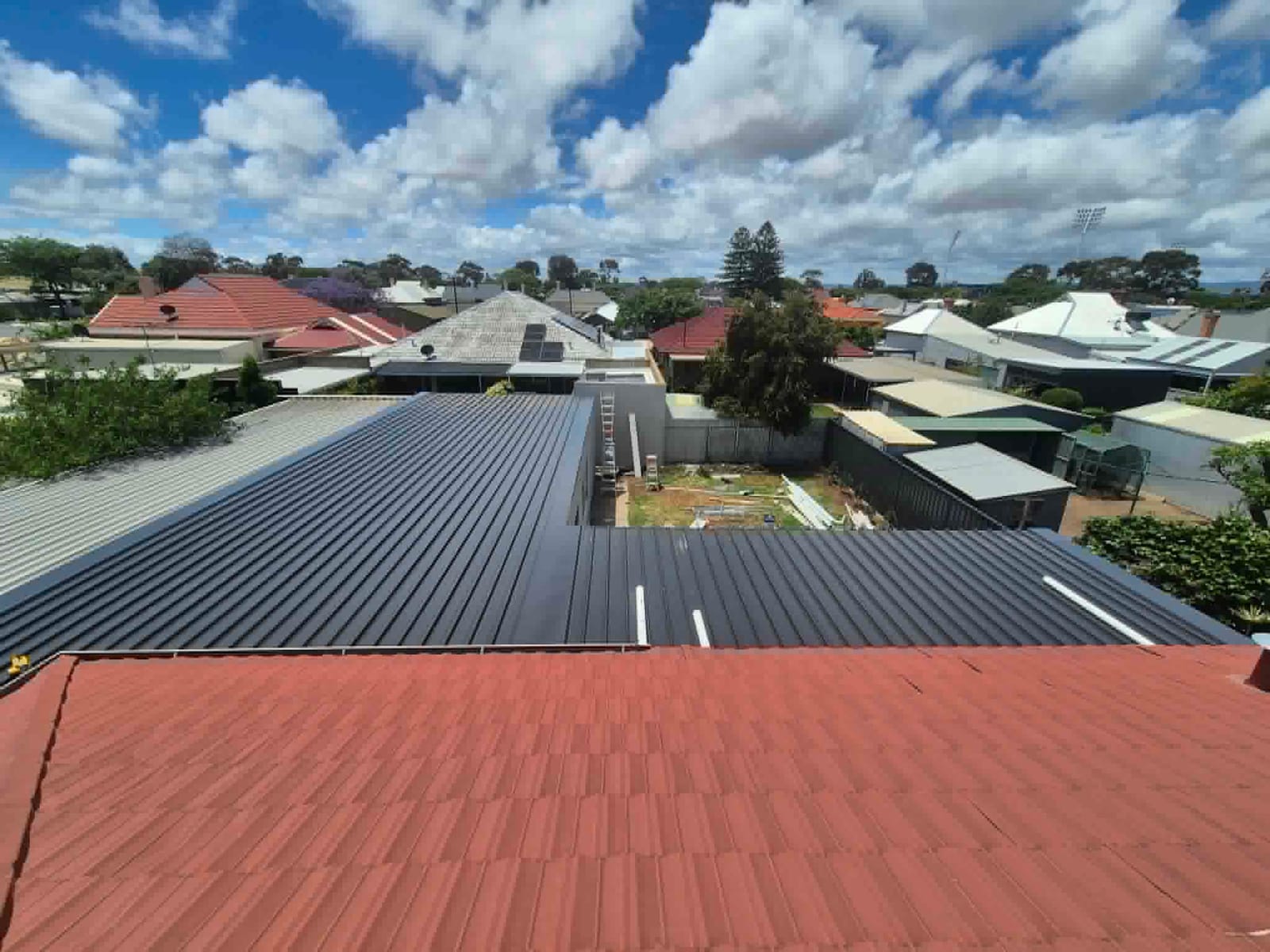
If your tile roof is sound, a restoration is usually the cheaper way to get more years out of it. If the tiles are porous, cracking or failing across the whole roof, replacing them with Colorbond steel is often the better long-term spend: the roof gets much lighter, there is no ridge mortar to repoint, and the upkeep drops to checking screws, flashings and gutters. Neither material is "better" for every house. The right call depends on the condition of the roof you have now, the frame under it, and how long you plan to stay.
Converting tile to metal is one of the most common re-roofing requests we get in Adelaide's north-east. This guide covers how the two compare, what the work involves, and the questions worth asking before you decide.
Tile and Colorbond at a glance
- Weight. Concrete and terracotta tiles are heavy. Steel sheeting is a fraction of the weight, which takes load off the roof frame. That matters most on older homes where the timbers have sagged over the years.
- Upkeep. A tile roof has ridge and hip capping bedded in mortar, which cracks over time and needs rebedding and repointing, plus the odd broken tile. A metal roof has no mortar. Its upkeep is screws, laps, flashings and keeping leaves off the sheets so they do not hold moisture.
- Leaks. Tile roofs rely on overlapping tiles and the sarking underneath, so a cracked or slipped tile can let water in. Metal sheets run in long lengths from ridge to gutter, so there are far fewer joins for water to find.
- Heat. Both can make a comfortable home. What matters most is the insulation and sarking under the roof, and the colour on top. Lighter colours reflect more of the sun, which is worth thinking about on an Adelaide summer roof.
- Rain noise. Metal is louder in heavy rain than tile. An insulation blanket laid under the sheets takes most of the edge off, and many people end up liking the sound.
- Looks. Some homes, particularly older brick villas and character houses, suit tile. Others look sharper with a clean metal profile. It is a matter of taste and of what suits the street.
When restoring the tiles makes more sense
A tile roof is not finished just because it looks tired. If most tiles are still sound, the battens are in good shape and the problems are cracked ridge mortar, a few broken tiles and some moss and lichen, a restoration is usually the better value. That means a clean, the ridge capping rebedded and repointed, broken tiles replaced and, if you want it, a protective coat. Our guide to roof rebedding and repointing covers the most common repair, and the restoration vs re-roofing guide covers that decision in more detail, including published cost ranges.
When switching to Colorbond makes more sense
Replacing tiles with metal tends to be the better spend when:
- Tiles are porous, delaminating or cracking across the whole roof, not just in a few spots
- Leaks keep turning up in new places each winter even after repairs
- The roof frame is showing its age and would benefit from a lighter load
- You are renovating or extending and want one roof line and one material across the house
- You plan to stay for many years and would rather not repoint ridge capping again
If two or three of those sound familiar, it is worth getting the roof looked at with replacement on the table.
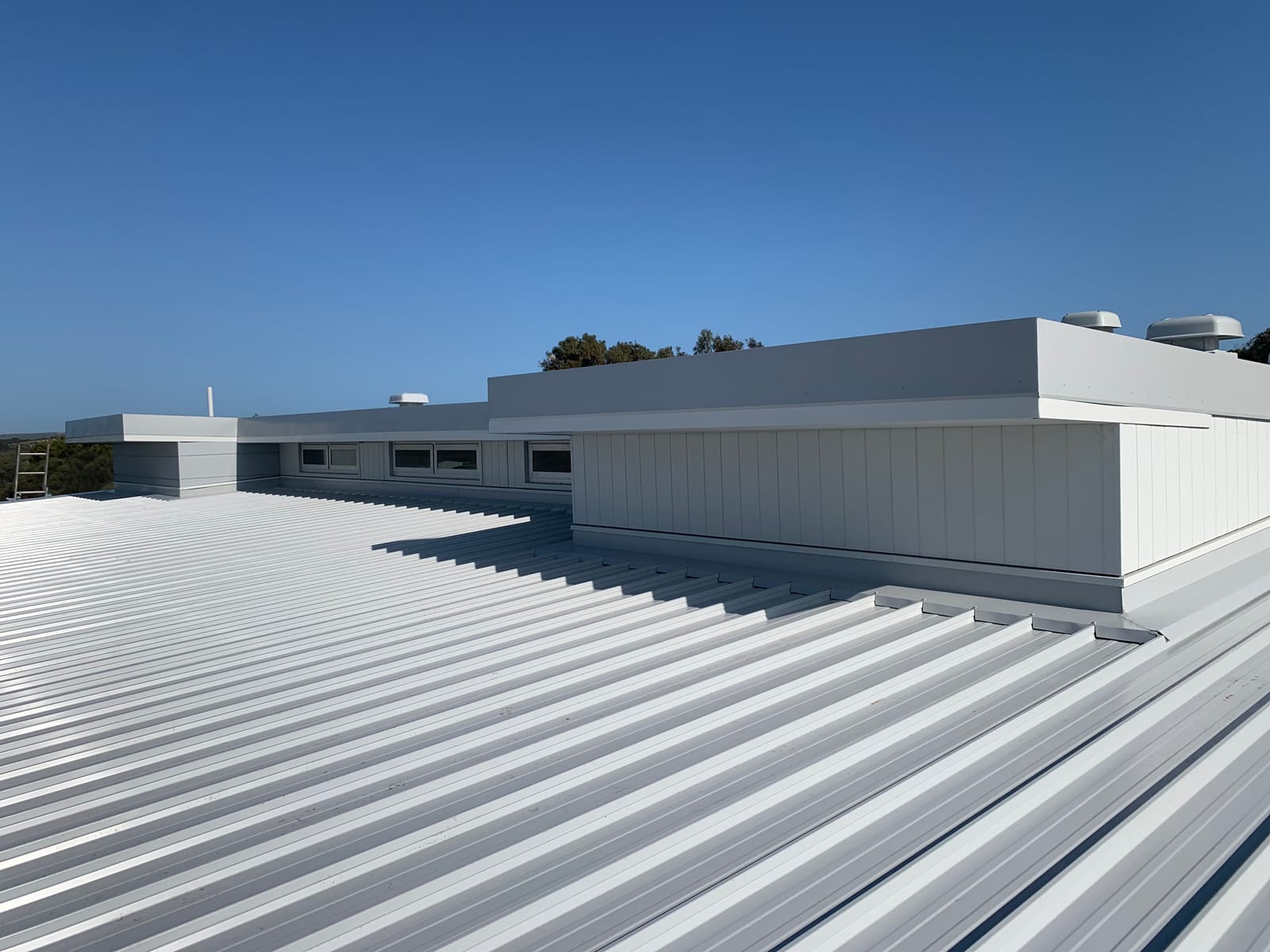
What a tile-to-Colorbond conversion involves
- Inspection and quote. Sam checks the existing roof and the structure under it, then gives you an honest repair-or-replace recommendation. Replacement is not always the answer.
- Stripping the tiles. The old tiles and capping are removed and taken away.
- Frame and battens. With the tiles off, the timbers and battens are checked. Metal sheets are fixed differently from tiles, so battens are adjusted or replaced where the new roof needs it.
- Sarking and insulation. A sarking layer or insulation blanket goes down where needed, which helps with heat, condensation and rain noise.
- New sheets, flashings and capping. The Colorbond sheets go on with new ridge capping, flashings and fixings, not the old ones refitted.
- Gutters and clean-up. A re-roof is the cheapest time to replace tired gutters, fascia and downpipes, because the access is already set up. The site is cleaned up at the end.
You can read more about how we approach this on our re-roofing and tile-to-Colorbond conversions page.
Questions to sort out before you decide
- Solar panels. Panels have to come off for the roof to be replaced and go back on afterwards. That is work for a solar installer and electrician, so build it into the plan and the budget.
- Heritage or character areas. Some properties in heritage or character areas have rules about roof materials and colours. If your home might be one of them, check with your council or PlanSA before you commit.
- Bushfire areas. In the Adelaide Hills and other bushfire-prone areas, sealing gaps against embers matters. Ask how the new roof will be sealed at the ridge, eaves and valleys.
- Colour. Darker colours look striking but absorb more heat. Look at a sample in daylight on your own roof line before choosing.
- Gutters and fascia. Decide whether they are being replaced at the same time. Doing it later means setting up access twice.
What affects the cost
Every conversion is quoted on the roof in front of us. The main things that move the price are the roof area and its shape (a hip roof has more cutting and capping than a simple gable), the pitch and height, how much batten work the frame needs, whether sarking or an insulation blanket is going in, the number of penetrations such as vents, flues and skylights, and whether gutters, fascia and downpipes are being replaced too. Solar removal and refitting is a separate cost from a separate trade.
Based in Redwood Park, we quote tile-to-Colorbond conversions in Tea Tree Gully, Modbury, Golden Grove, Salisbury and across greater Adelaide.
Frequently asked questions
Is Colorbond cheaper than re-tiling?
It depends on the roof. Replacing a tile roof with new tiles and replacing it with Colorbond both involve stripping the old roof, so the comparison comes down to materials, batten work and the shape of the roof. Ask for both options on the same quote if you are undecided.
Is a metal roof hotter than a tile roof?
Not by itself. Comfort under either roof depends mostly on the insulation and sarking underneath and the colour on top. Lighter colours reflect more heat.
Is a Colorbond roof noisy in the rain?
Metal is louder than tile in heavy rain, but an insulation blanket laid under the sheets reduces the noise a lot.
Can you put Colorbond over the existing tiles?
No. The tiles are removed first. Laying metal over tiles would add weight instead of removing it and would hide any damage to the frame and battens.
How long does a tile-to-metal conversion take?
It depends on the size and shape of the roof and the weather. Sam will give you a timeframe with the quote.
Related services
Want Sam to take a look?
Send a photo through the quote form for an honest assessment and a free, no-obligation quote, or call Sam directly.