If your roof leaks around a chimney, skylight, vent or flue, or along the line where the roof meets a wall, the problem is very often the flashing, not the tiles or sheets. Flashings are the strips of metal that seal the joins the roof covering cannot. They rust, the sealant on them dries out and cracks, and metal flashings can lift in the wind. The fix is usually to repair or re-form the flashing properly, not to add another layer of silicone.
Leaks at flashings are some of the hardest to pin down, because water can travel a long way along a batten or rafter before it drips. Sam traces every leak back to its real source before repairing it, so you pay to fix it once.
Where flashings are, and what they do
- Apron flashings run along the bottom edge where a roof meets a wall below it, such as a verandah or extension roof against the house.
- Wall and step flashings seal the sides where a roof runs up against a wall.
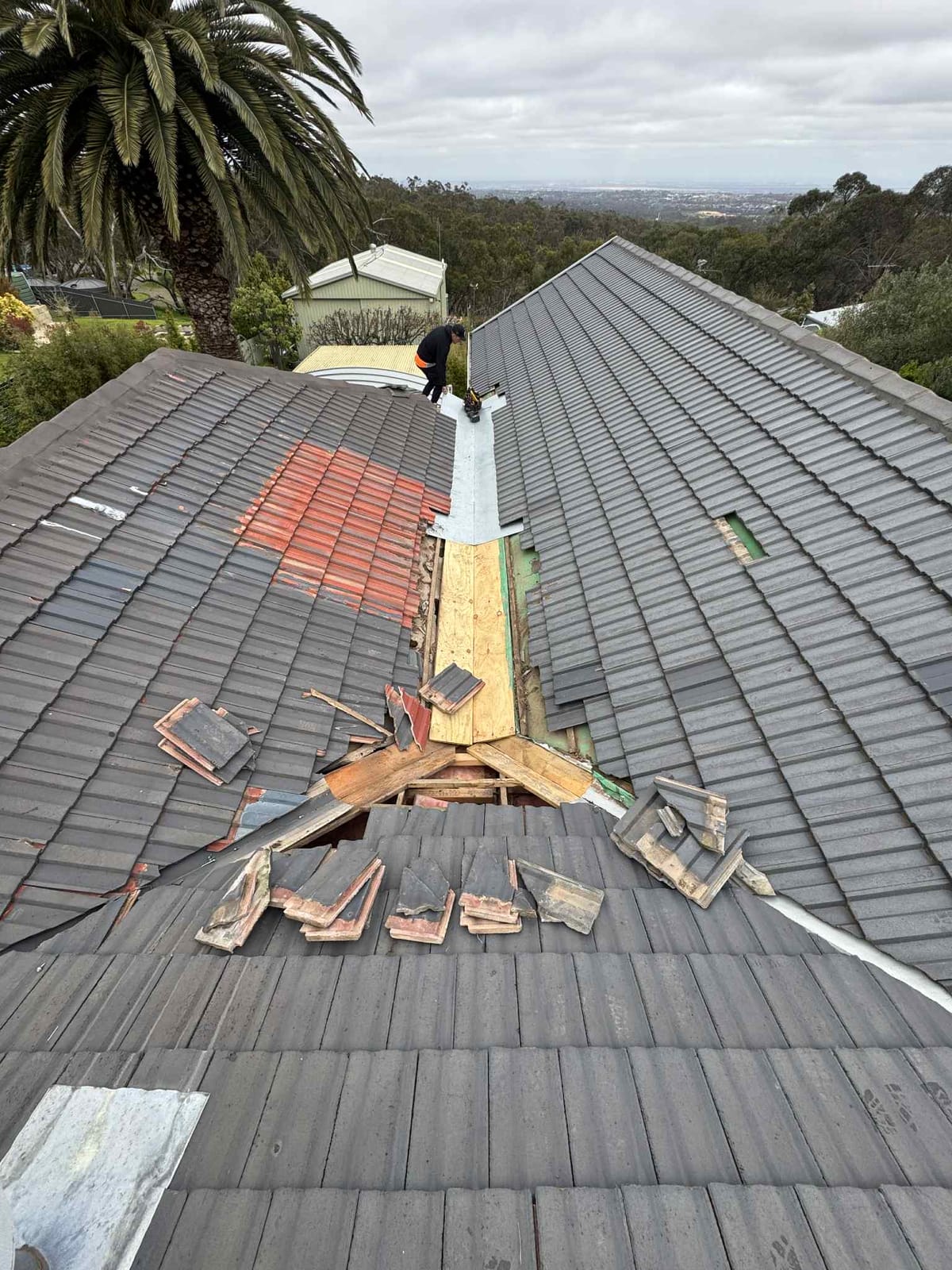
- Valley flashings (valley irons) line the channel where two roof slopes meet. They carry a lot of water and collect leaves.
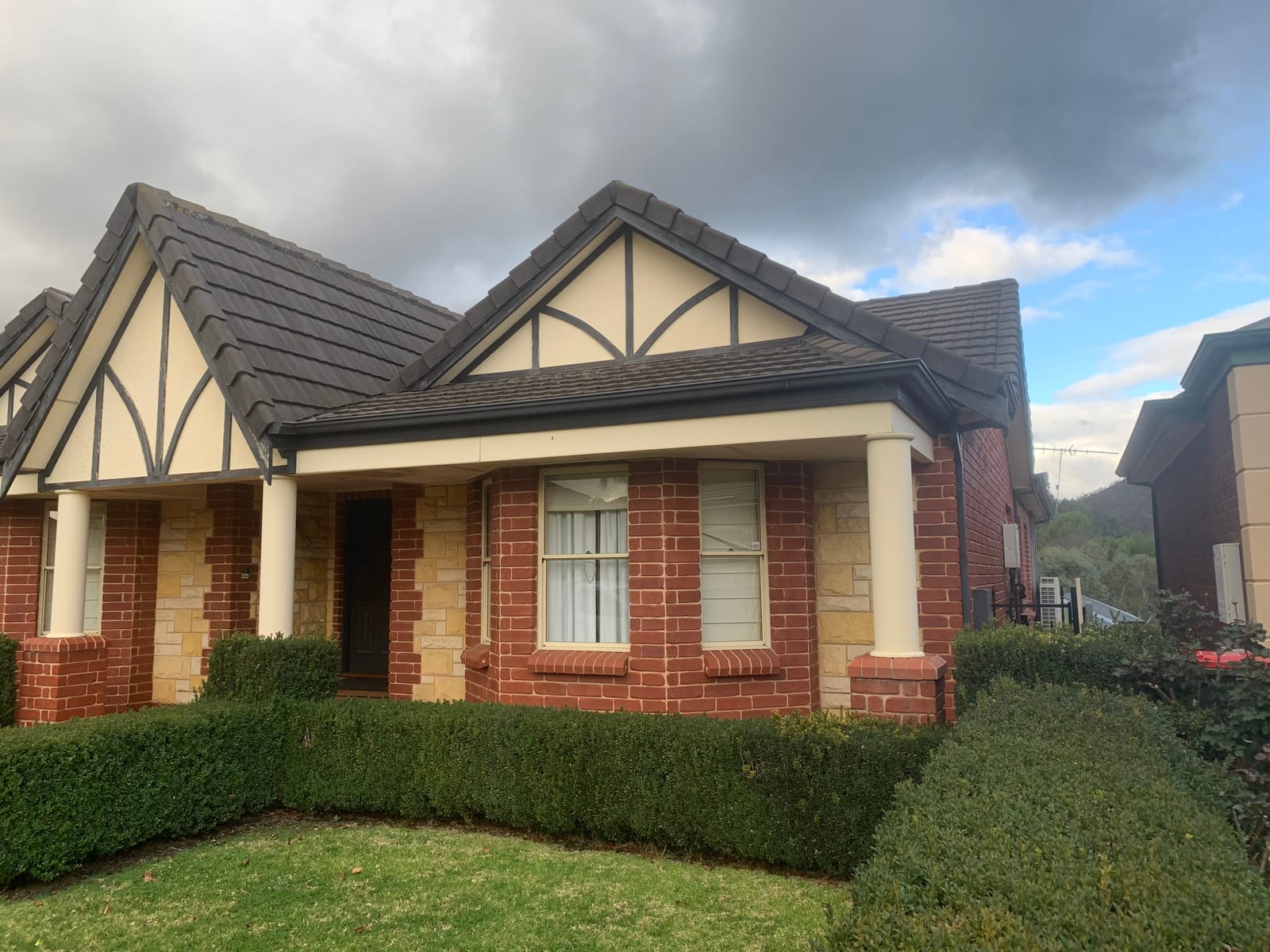
- Barge flashings cap the sloping edges of a roof at the gable ends.
- Chimney and tray flashings wrap around a chimney and stop water running down its back face into the roof.
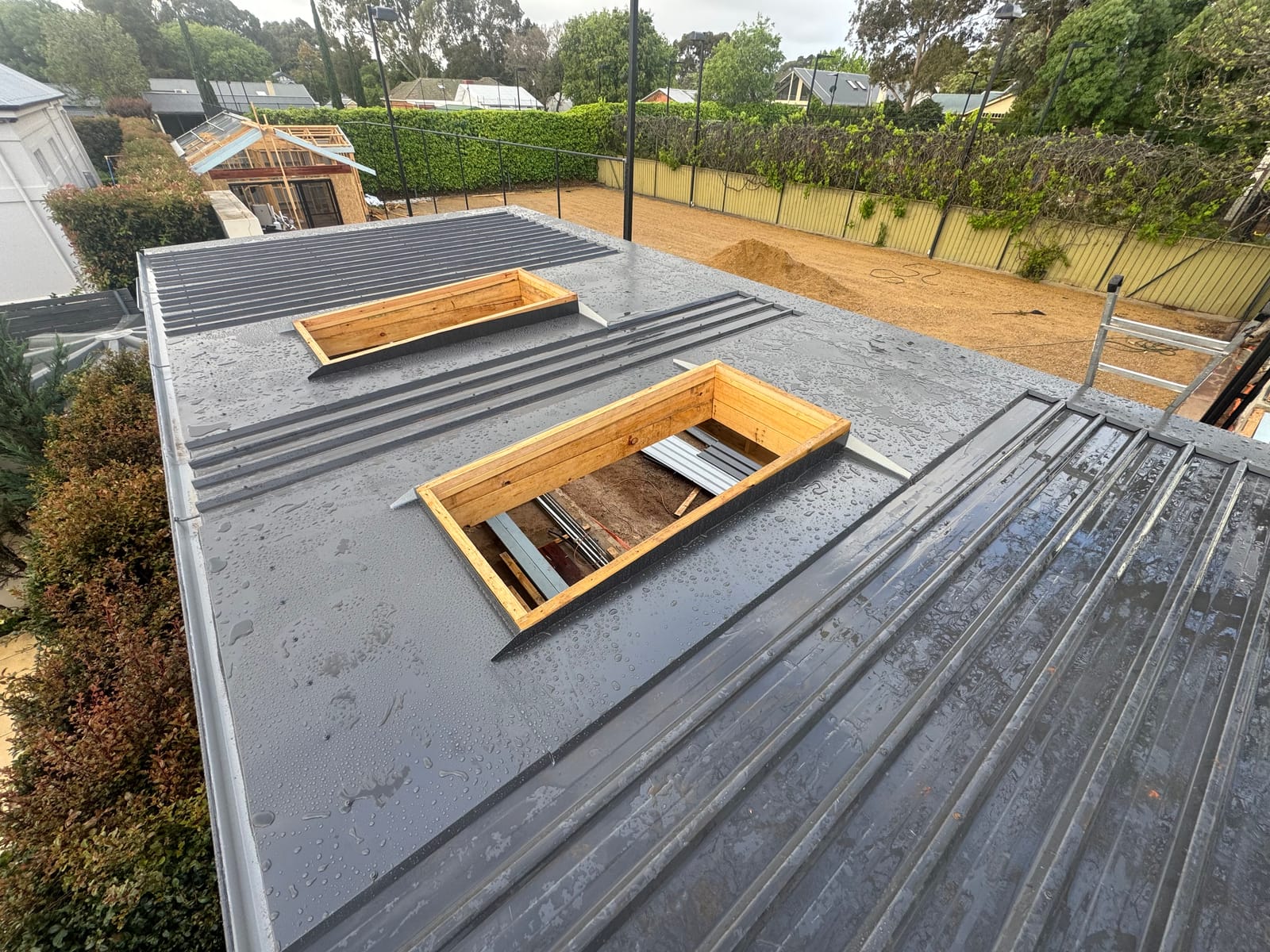
- Penetration flashings seal around skylights, vents, flues, solar fittings and pipes that come through the roof.
Signs a flashing has failed
- A ceiling stain near a chimney, skylight or exhaust fan, or along an inside wall below where the roof meets the house
- A leak that only shows up in wind-driven rain from one direction
- Rust along a valley iron or on the flashing around a flue
- Cracked, shrunken or peeling sealant along the edge of a flashing
- A flashing that has lifted, bent, or pulled out of the wall
- Old silicone smeared over the joins, which usually means someone has patched it before
Our guide to why roofs leak covers the other common causes, so you can rule them in or out.
Why flashings fail
Rust. Steel flashings rust, especially where leaves sit in a valley and hold water against the metal, or where two different metals touch. Sealant breaking down. Sun and heat dry out and crack the sealant at the edges, and once it opens up water gets behind the flashing. Wind. A flashing that was not fixed down well can lift in a storm and stay lifted. Movement. On older tile roofs, the flashing against a chimney or wall is often tucked into the mortar joint of the brickwork. When that mortar cracks and falls out, the flashing comes away from the wall.
How flashing repairs are done
- Re-sealing and refixing where the flashing itself is sound but the sealant has failed or it has lifted.
- Re-forming or replacing a flashing that has rusted, split or been badly patched, with new metal shaped to fit.
- Replacing valley irons that have rusted through, with the tiles along the valley lifted and re-laid.
- Re-flashing around penetrations such as skylights, vents and flues, so each one has its own proper seal.
- Checking the flashings nearby at the same time, so the same leak does not come back through a second gap.
A bead of silicone over a failed flashing might stop a drip for a while, but it is a short-term patch, not a repair. When a roof is being re-roofed, the flashings should be renewed too rather than the old ones refitted, which is what we do on our re-roofing jobs.
Get a leak looked at
If you have a leak near a chimney, skylight or wall, take a photo of the stain inside and one of that part of the roof from the ground, and send them through our quote form. It takes up to 8 photos, and it is usually enough for Sam to give you an honest first assessment. Sam is based in Redwood Park and repairs flashings across Tea Tree Gully, Modbury, Golden Grove, Salisbury and the rest of Adelaide. Prefer to talk? Call Sam on 0407 559 774. See our gutters, downpipes and flashings and roof repairs pages for the full range of work.
Frequently asked questions
What is a roof flashing?
A flashing is a strip of metal that seals a join the roof covering cannot, such as where the roof meets a wall or chimney, along a valley, at the gable edges, or around skylights, vents and flues.
Can a leaking flashing be repaired, or does it need replacing?
If the flashing is sound and the sealant has failed or it has lifted, it can usually be re-sealed and refixed. If it has rusted, split or been badly patched, it is better re-formed or replaced with new metal.
Why does my roof only leak in windy rain?
Wind-driven rain can push water sideways under a flashing that has lifted or whose sealant has cracked. A leak that only shows up in rain from one direction often points to a flashing on that side of the roof.
Do you repair flashings around skylights and chimneys?
Yes. A1 Roofing repairs and replaces chimney, wall, valley, barge and skylight or vent flashings across Adelaide's north-east and the wider metro area.
Want Sam to take a look?
Send a photo through the quote form for an honest assessment and a free, no-obligation quote, or call Sam directly.