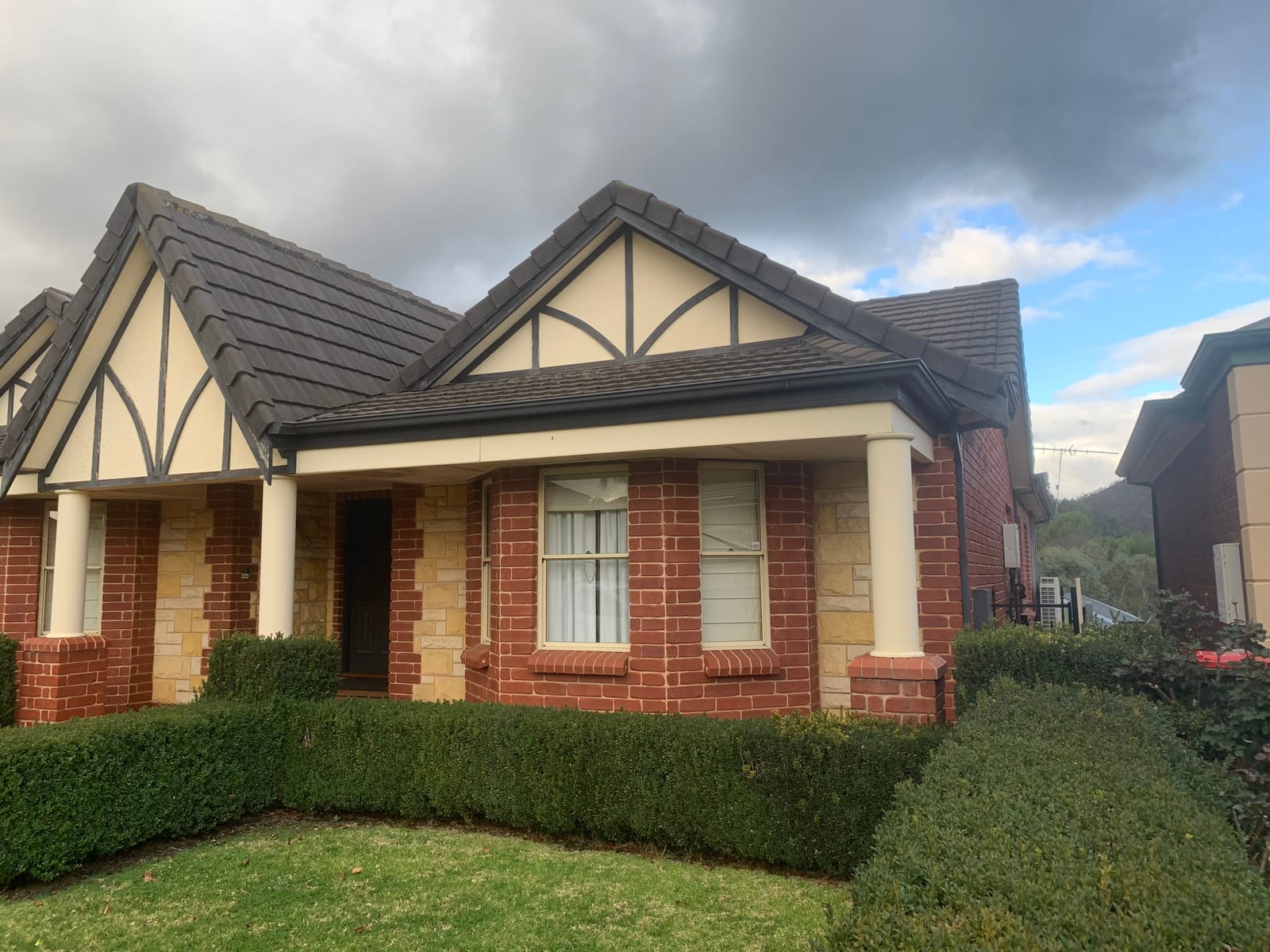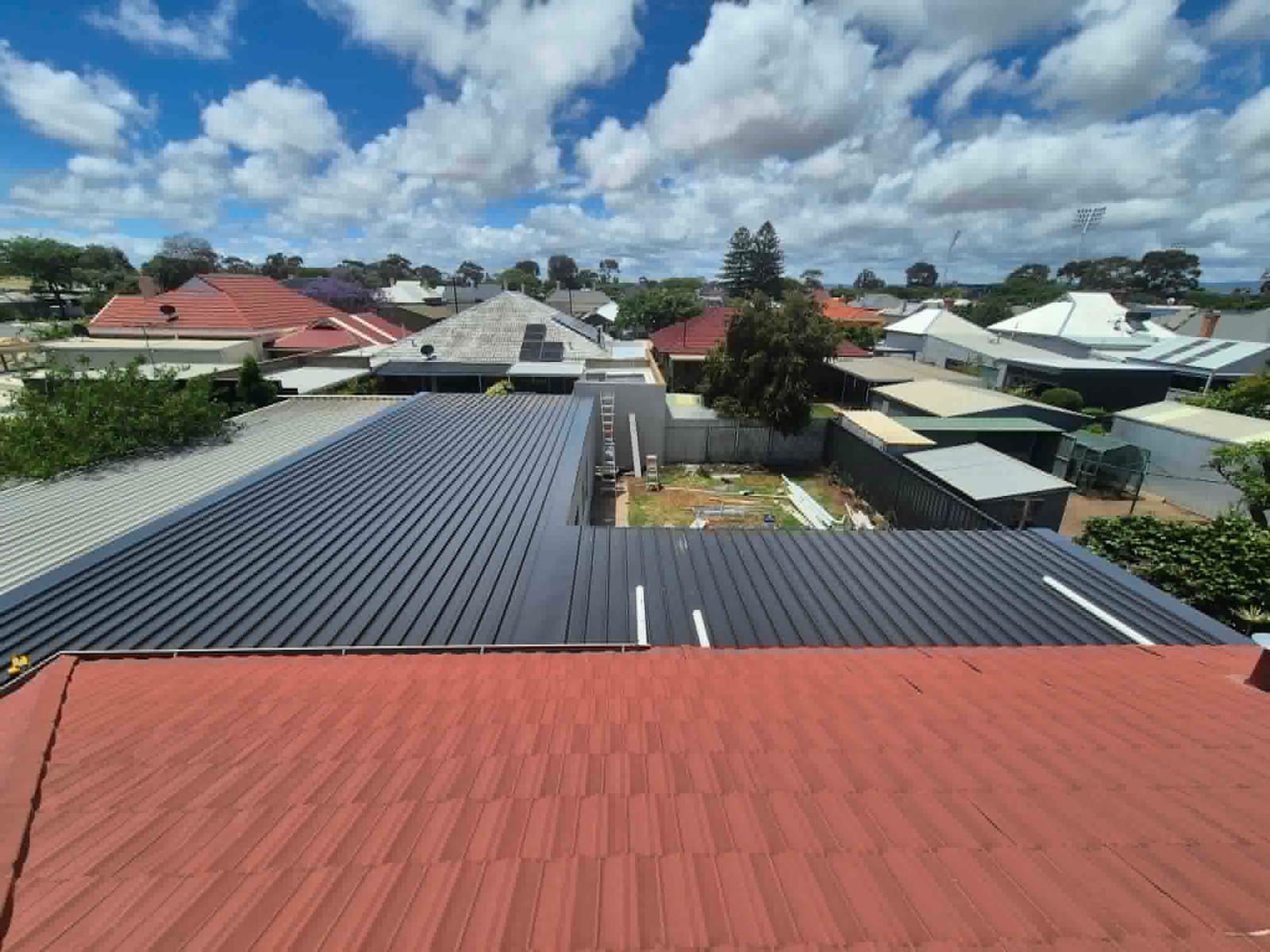
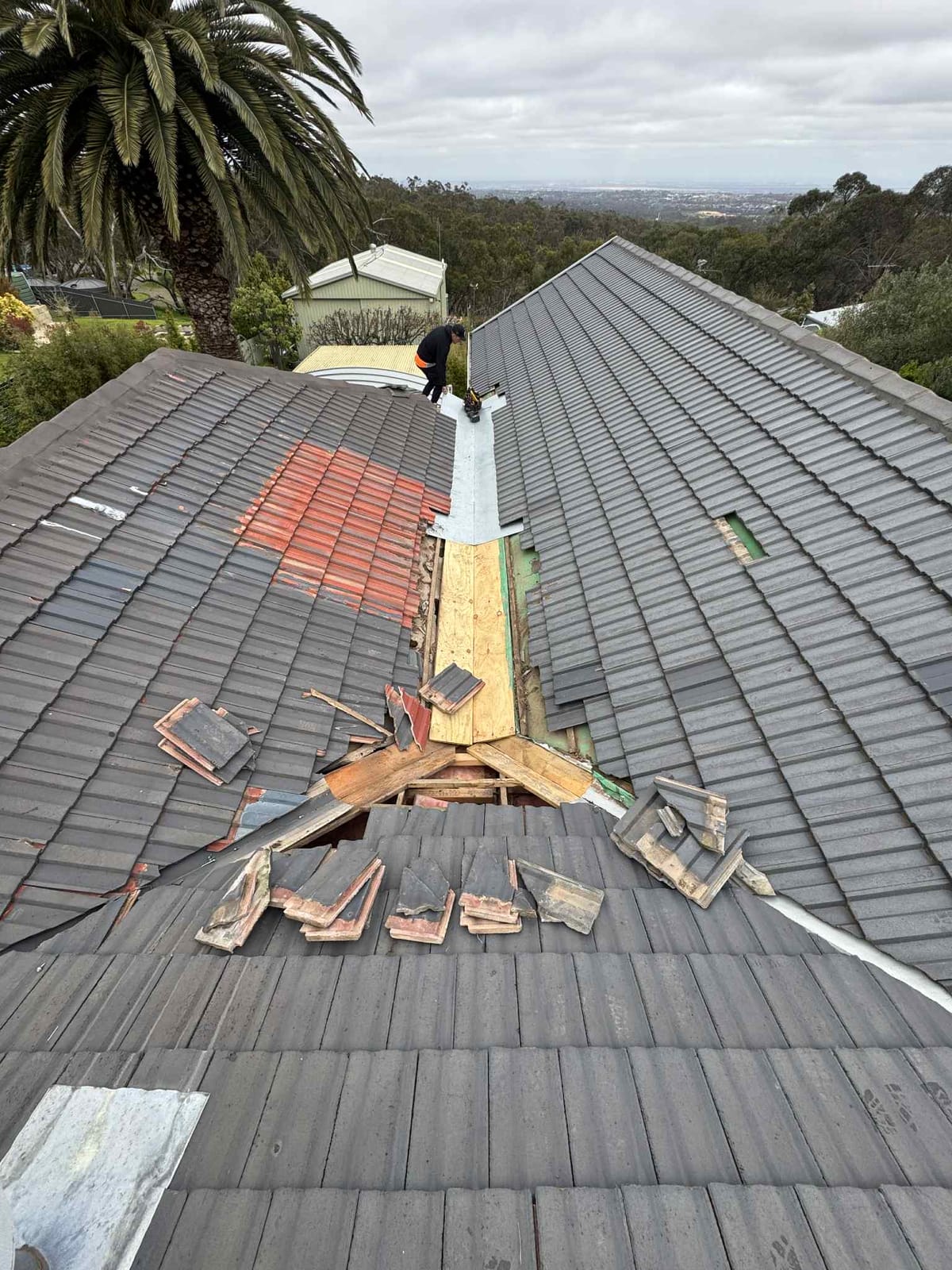
Most roof leaks come from a handful of places: cracked or slipped tiles, failed ridge capping mortar, worn or lifted flashings around walls, chimneys, skylights and vents, blocked or rusted valleys, and gutters or box gutters that overflow back into the roof. On metal roofs, add lifted screws and rust at the laps. The catch is that water usually runs along the battens and timber before it drips, so the stain on your ceiling is often metres away from the actual gap.
Why the stain is not where the leak is
Water that gets under a tile or sheet does not fall straight down. It follows the sarking, battens and rafters downhill until it finds a low point, then drips onto the ceiling. That is why patching the roof directly above a stain so often fails. A proper leaking roof repair starts by tracing the water path back to where it actually gets in, which is how we approach every roof leak repair.
The most common causes of a leaking roof
Cracked, slipped or broken tiles
A single cracked tile can let in a surprising amount of water. Tiles get cracked by foot traffic from antenna, solar or air-conditioning installers, by falling branches and hail, or simply by age. Slipped tiles leave a gap at the overlap that wind-driven rain gets straight through.
Failed ridge capping mortar
The mortar holding the ridge and hip caps cracks as the roof moves with the heat. Once it breaks up, rain blows in under the caps. Our rebedding and repointing guide covers the signs and the fix.
Flashings
Flashings seal the joins a roof covering cannot, such as where the roof meets a wall, around a chimney, and around skylights, vents and pipes. Old flashings rust, sealant dries out and cracks, and lead or metal flashings can lift in the wind. Leaks that appear only in heavy or wind-driven rain often trace back to a flashing.
Valleys
A valley is the channel where two roof slopes meet, and it carries more water than any other part of the roof. Leaves and debris build up in it and dam the water, old valley iron rusts, and tiles cut too short beside the valley let water spill over the edge. Valley leaks are common under trees.
Gutters and box gutters
When an eaves gutter blocks, water backs up and can spill over the back edge into the eaves and wall. Box gutters, which sit inside the roof line between a roof and a parapet wall or between two roofs, are a bigger risk: when they block or overflow, the water goes inside the building rather than over the edge. Rust, failed joints and blocked outlets are the usual causes. See when gutters and downpipes need replacing.
Metal roof faults
On metal roofs, look for screws that have backed out or lost their seals, rust at the laps where sheets overlap, and sheets lifted by wind. Condensation under a metal roof without sarking or insulation can also drip and look like a leak, which is another reason to find the real source before paying for a fix.
What you can safely check yourself
Please stay off the roof, especially when it is wet. From the ground and inside, you can still gather useful information:
- Note when it leaks. Every rain, only heavy downpours, or only when wind comes from one direction? That narrows the cause.
- Look from the ground. Check for slipped or broken tiles, gaps along the ridge, overflowing gutters, and branches touching the roof.
- Check the gutters during rain. Water pouring over the front or back edge points to a blockage or a gutter that has lost its fall.
- Look in the roof space only if you can do it safely from a proper manhole with a torch, staying on the joists. Water stains on timber or daylight through the tiles show where to look.
- Take photos of the stain inside and the roof from the ground. They help with diagnosis, and our quote form takes photos.
In the meantime, put a bucket under the drip, move anything valuable, and if water is near light fittings, power points or the switchboard, keep clear and have a licensed electrician check it.
Will a roof leak fix itself?
No. A leak is a break in the roof's waterproofing and it gets worse with every rain, soaking timber, insulation and plasterboard along the way. Small leaks are usually the cheapest to fix. For a rough idea, the independent What's The Damage? guide lists minor leak repairs in Adelaide at $230 to $735 (updated October 2026), and Canstar lists spot roof repairs at $200 to $500 (updated 15 January 2025). These are published third-party ranges, not our prices, and the real cost depends on what is causing the leak.
When it is urgent
If a storm has opened the roof up or water is pouring in, the first job is making the roof safe and watertight. Our storm damage guide covers what to do first, and our storm and emergency repairs page explains how we make a roof safe before the permanent repair.
Frequently asked questions
Why does my roof only leak in heavy rain?
Leaks that appear only in heavy rain usually point to water volume: a valley or gutter that cannot carry the flow and overflows, a box gutter outlet that is partly blocked, or a flashing that only floods when water backs up against it.
Why does my roof leak when it is windy?
Wind-driven rain gets in sideways under slipped tiles, cracked ridge capping and lifted flashings that stay dry in normal rain. If leaks appear when wind comes from one direction, the cause is usually on that side of the roof.
Can a roof leak be fixed while it is raining?
A roof can often be made safe in wet weather, for example by tarping or a temporary repair, but the permanent repair is done once the roof is dry and safe to work on.
Is a ceiling stain always a roof leak?
Not always. Plumbing, air-conditioning drains and condensation can also stain a ceiling. If the stain grows after rain, the roof is the most likely cause.
Want Sam to take a look?
Send a photo through the quote form for an honest assessment and a free, no-obligation quote, or call Sam directly.